ALFREDO GREÑAS
Engraver, publisher, satirist, exile
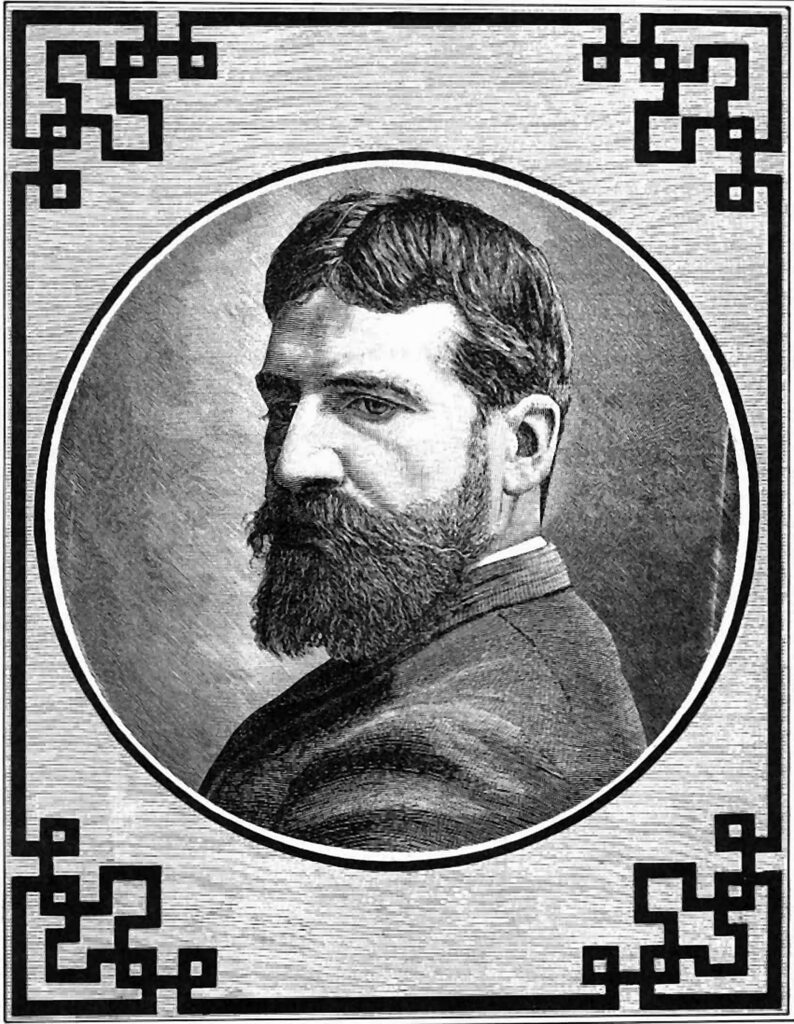
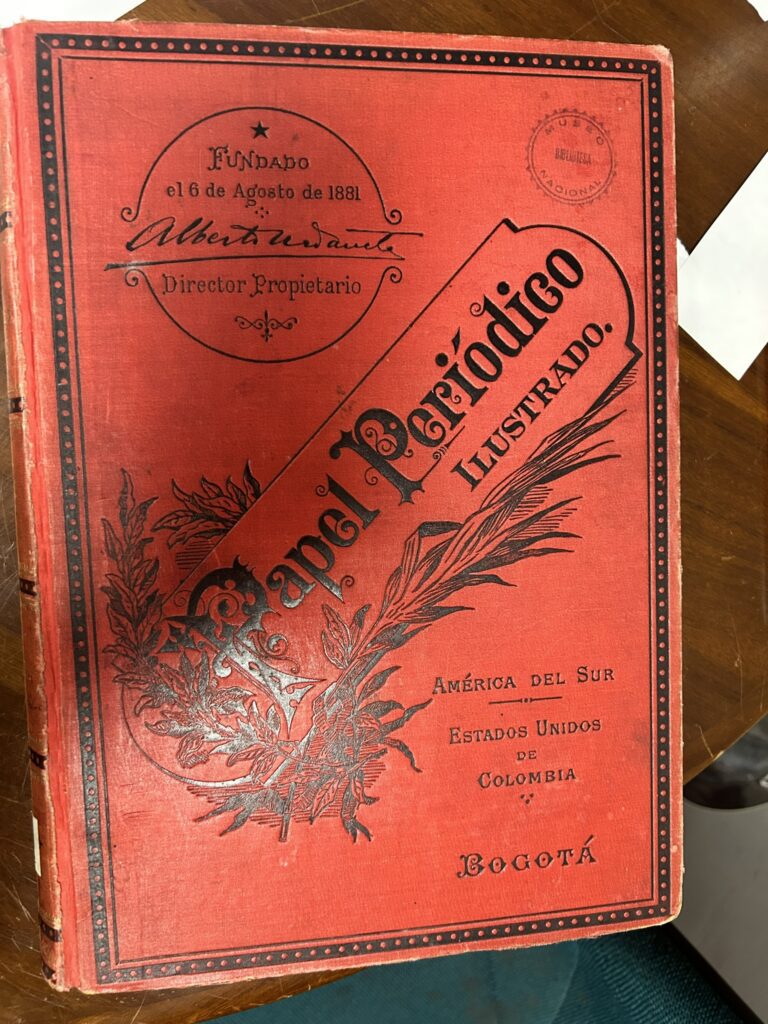
Born in Bucaramanga in 1857, Alfredo Greñas fought with the radical Liberals in the civil war of 1876–1877 and after the war studyied engraving under Alberto Urdaneta, and was working for Papel Periódico Ilustrado by 1881. During the civil war of 1885, he helped produce El Posta, a clandestine opposition paper printed on a portable press. The press was confiscated, Greñas was arrested, and a pattern of publishing, censorship, and punishment had begun.
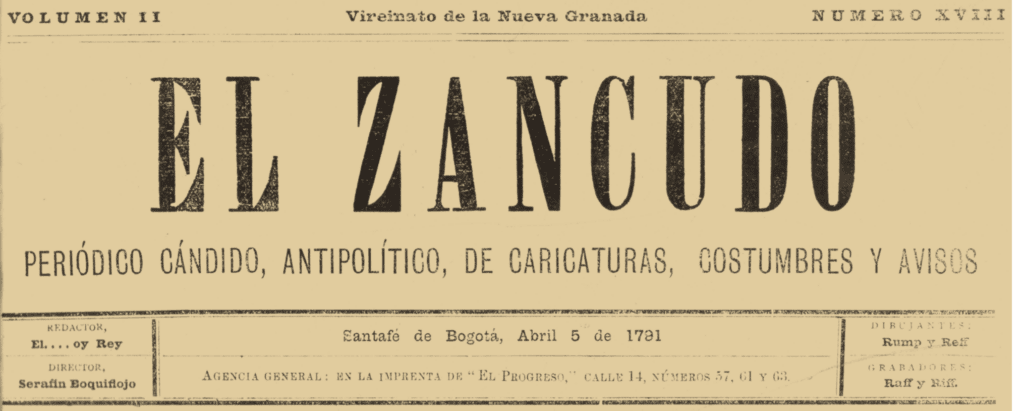
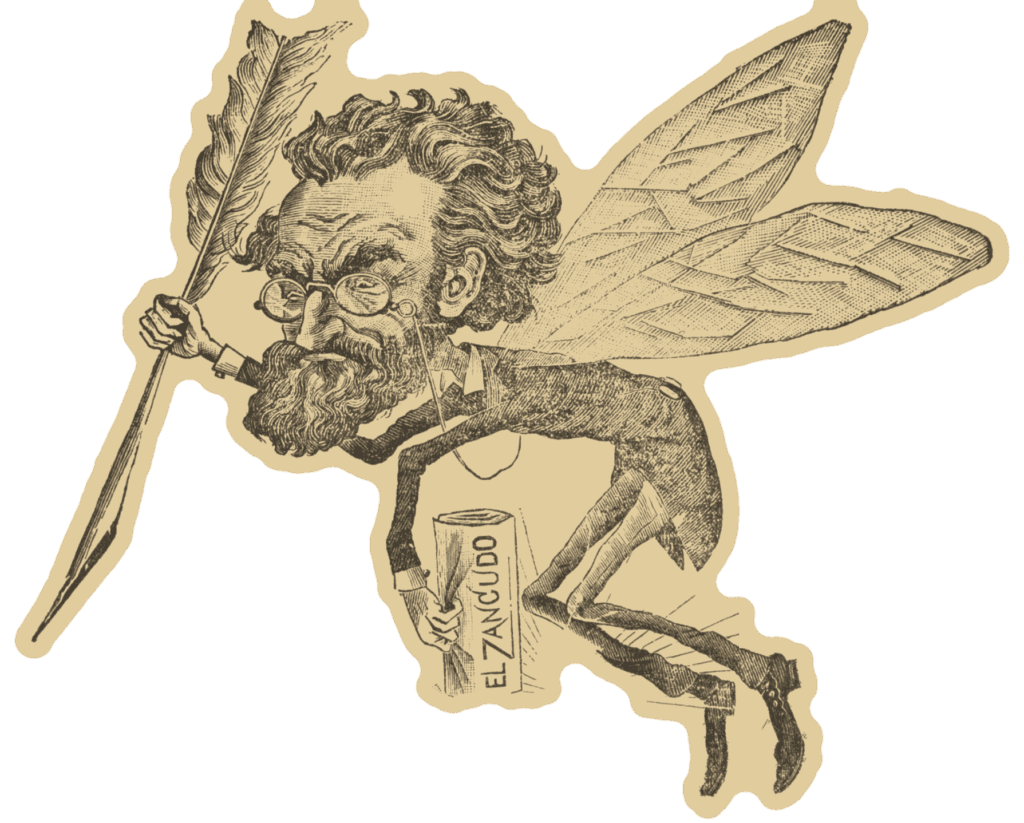
After the war he founded El Progreso in 1886, initially as a cultural publication, although it too was closed for political reasons. More papers followed: El Precursor, El Loco, El Zancudo, La Catástrofe, El Cóndor, El Domingo, El Demócrata, El Mago, and El Barbero. In all, Greñas founded roughly twenty newspapers, often replacing one as soon as the current publication was fined, suspended, or shut down.
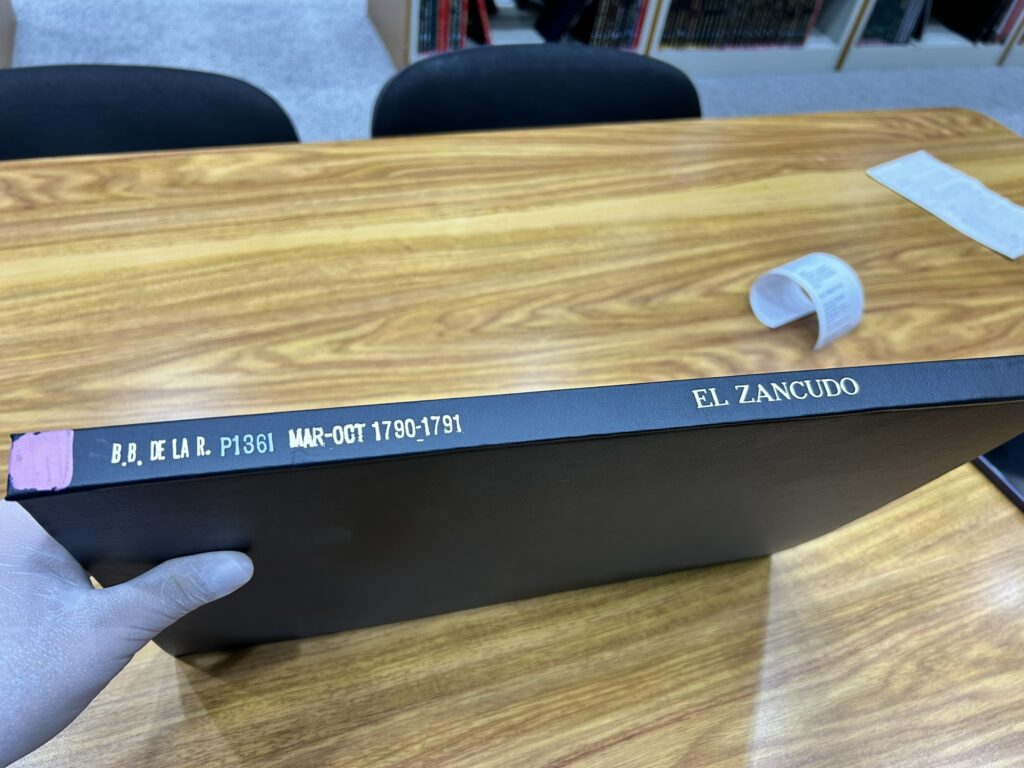
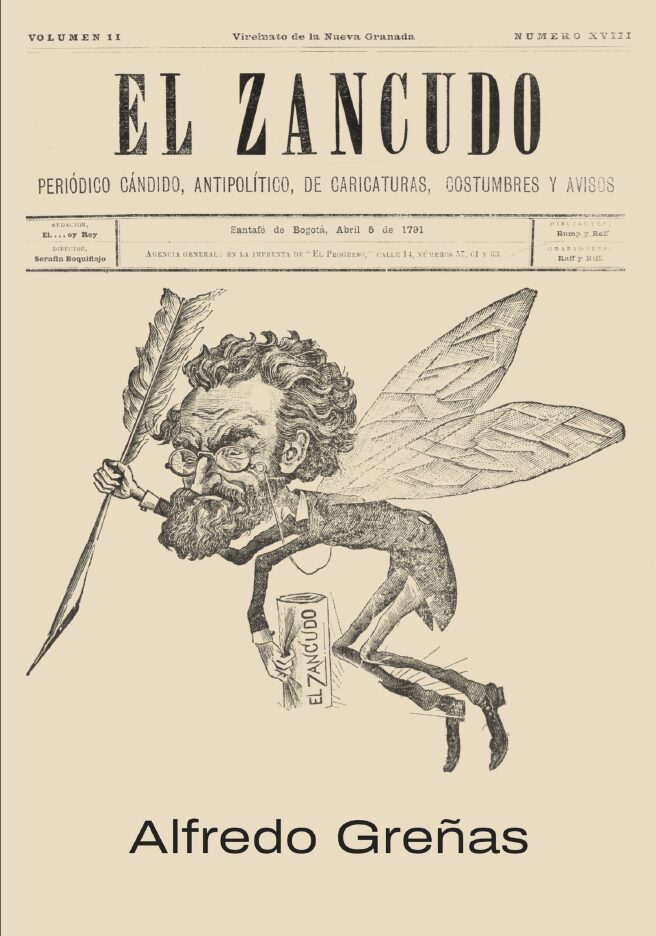
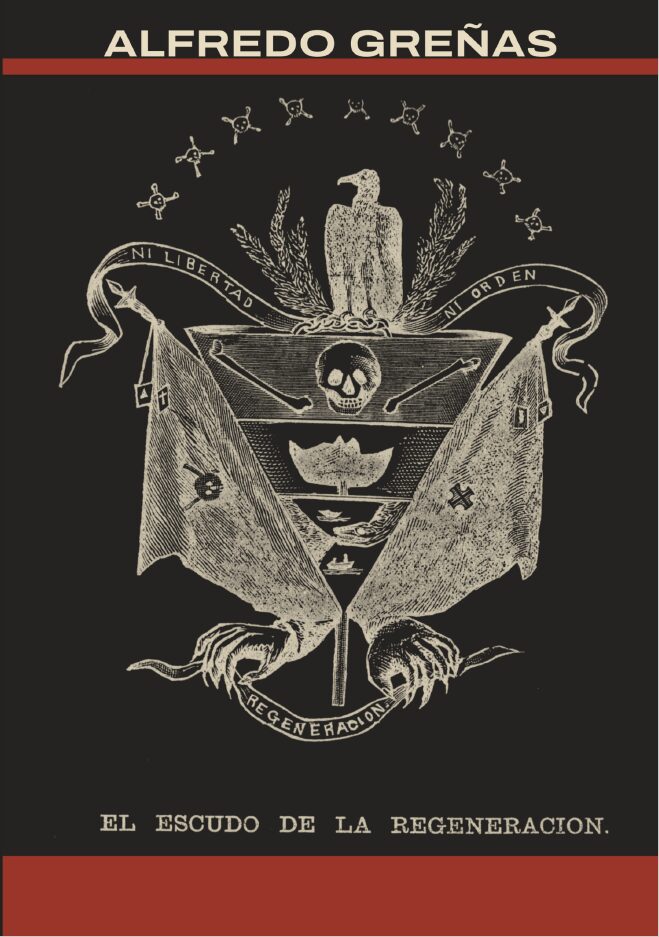
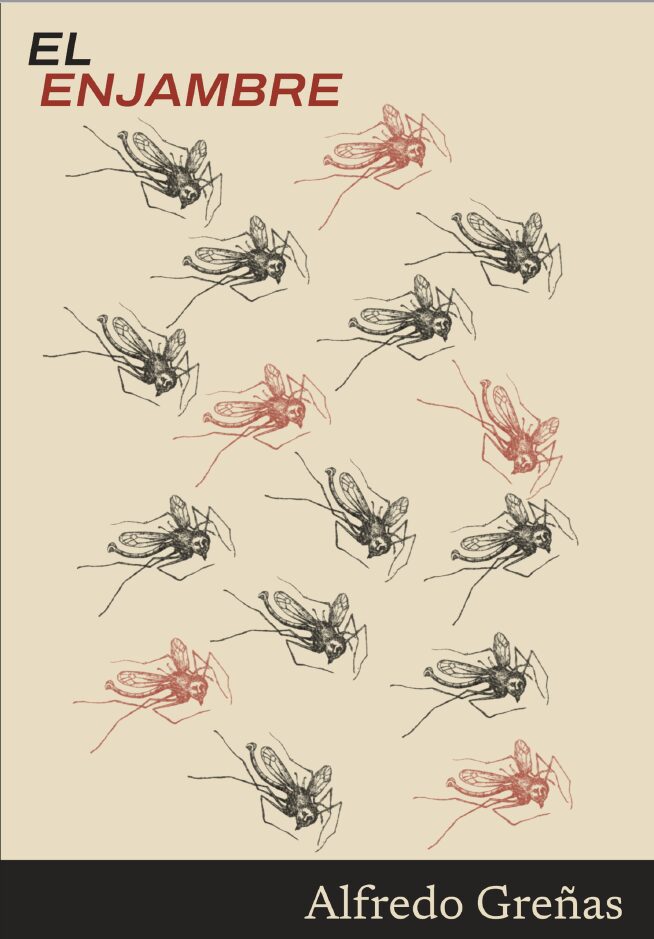
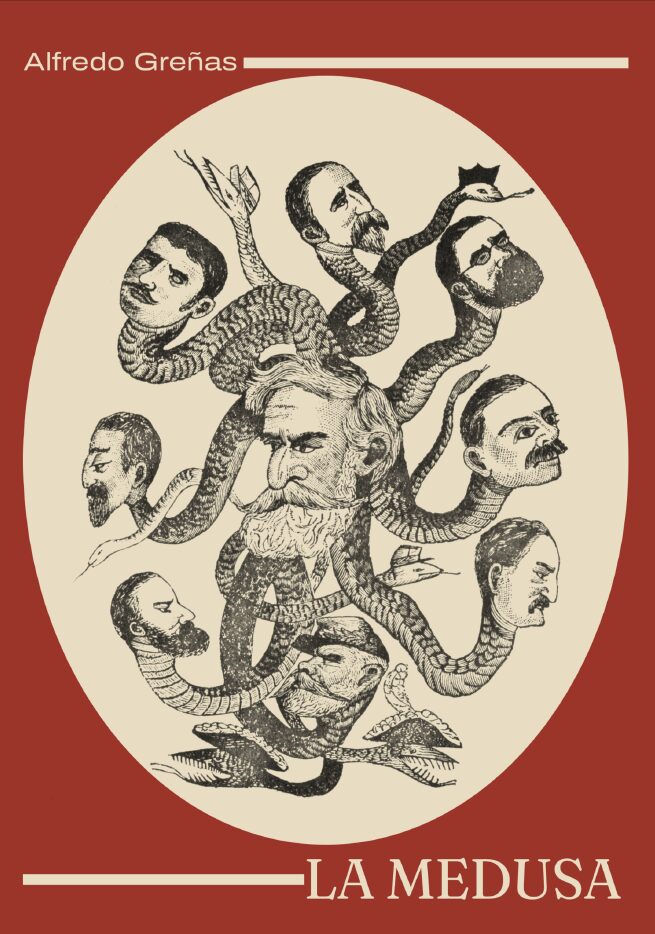
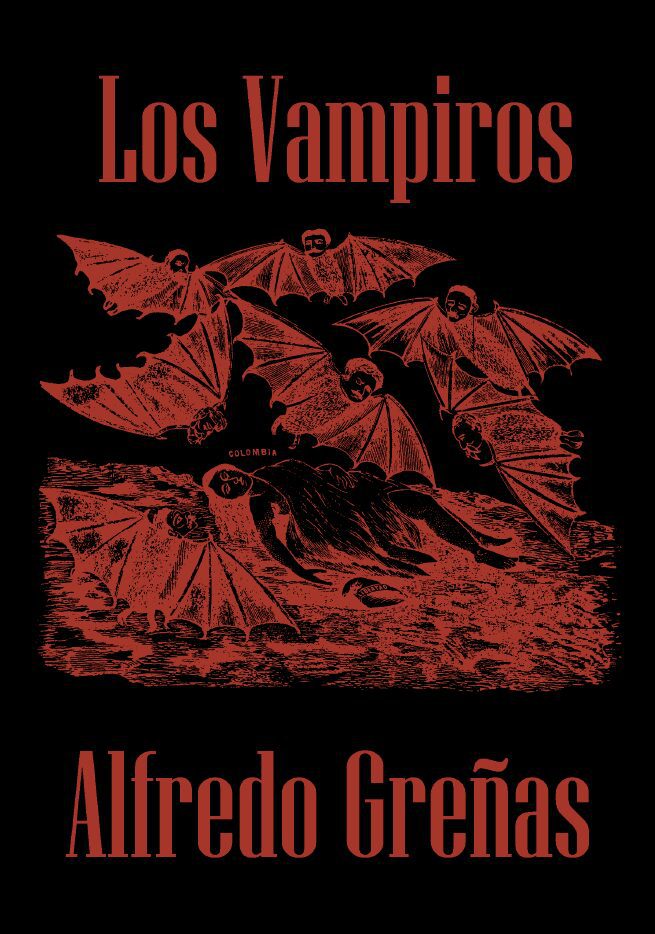
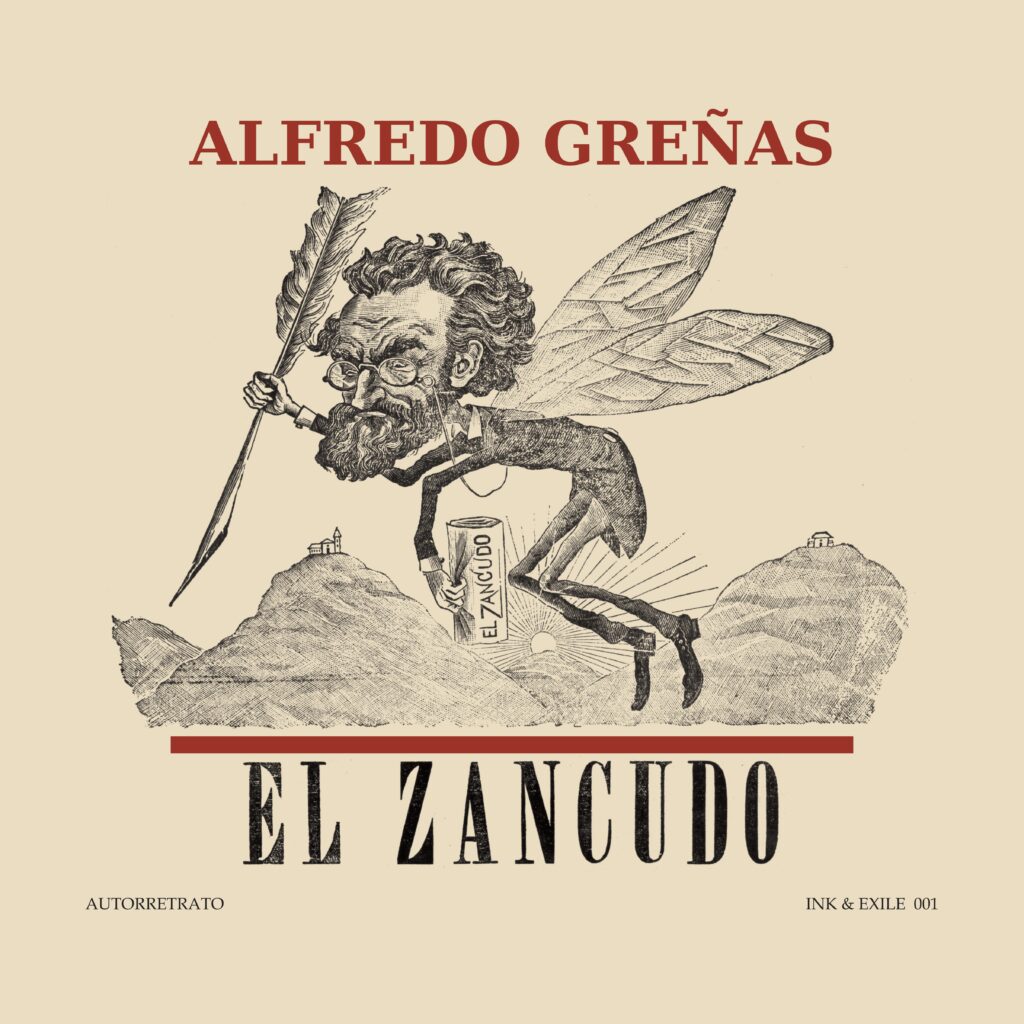
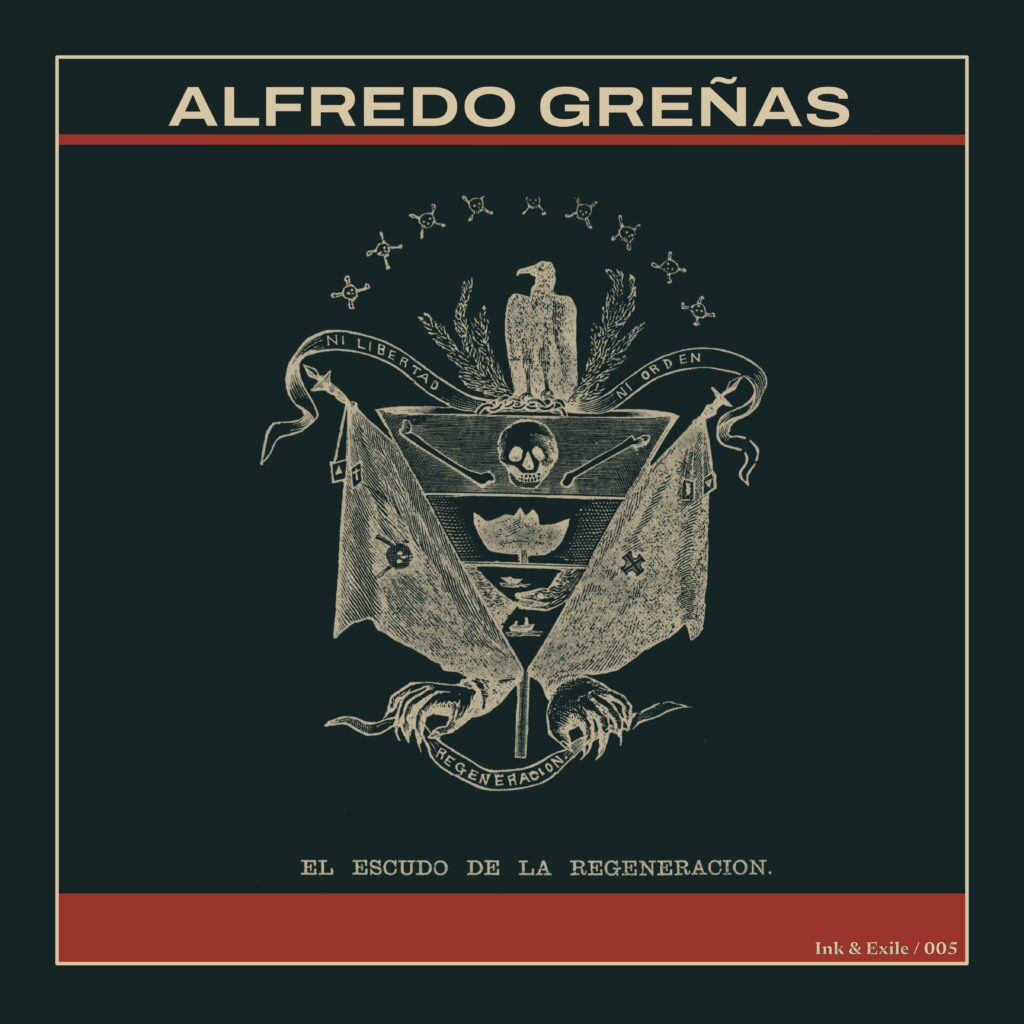
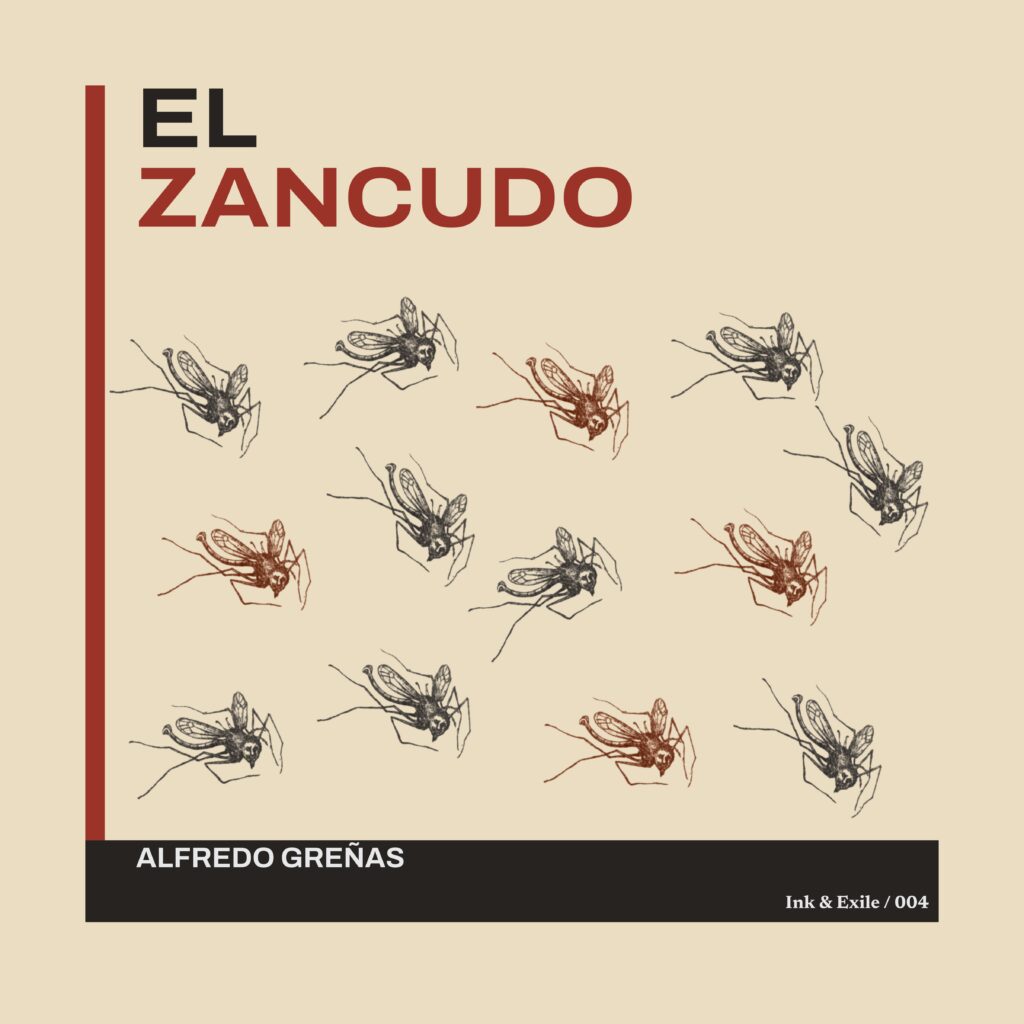
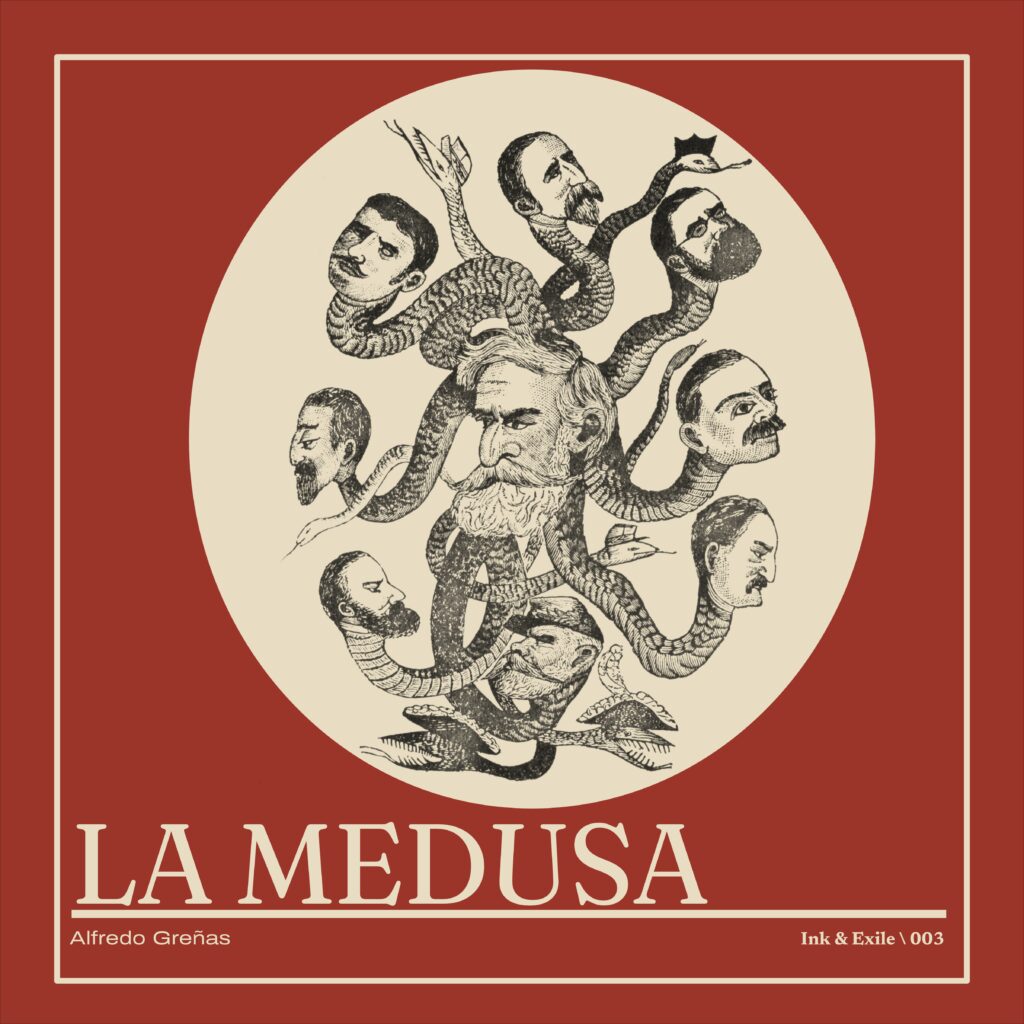
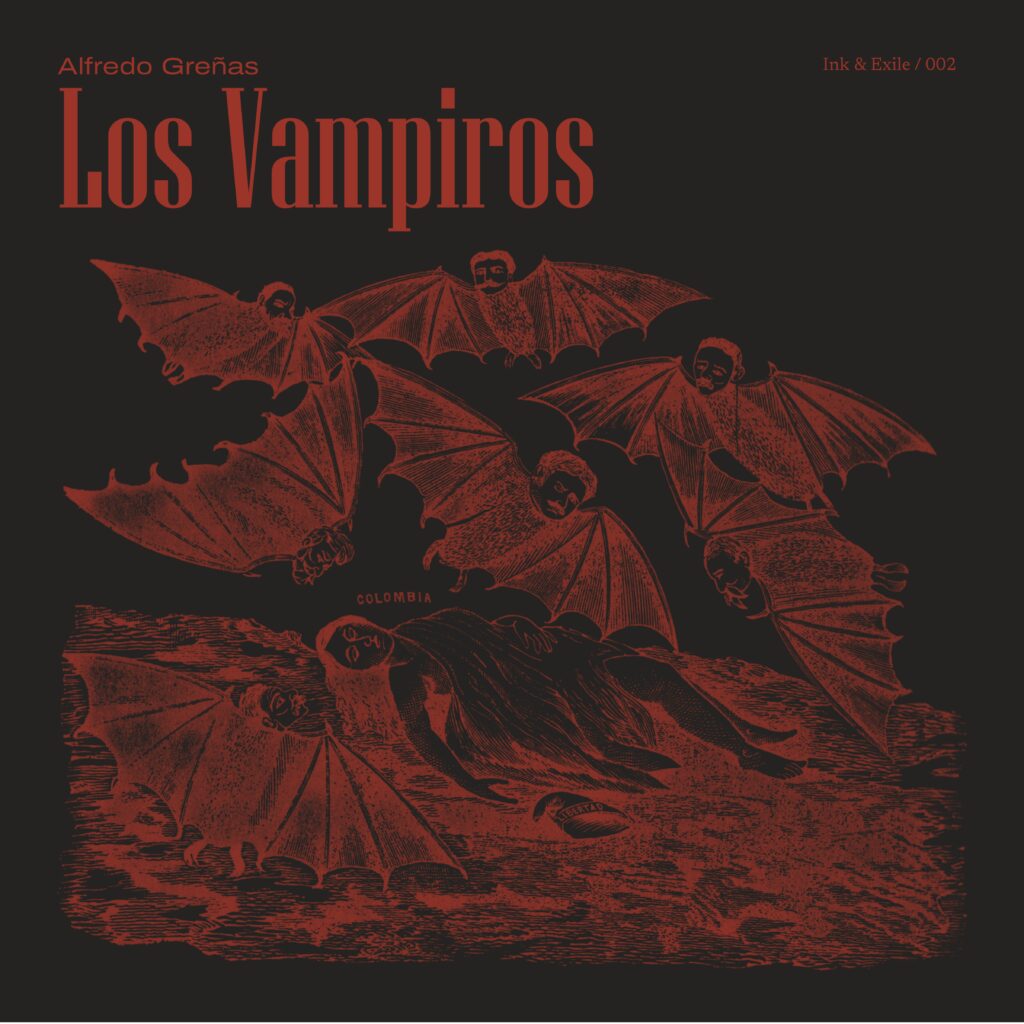
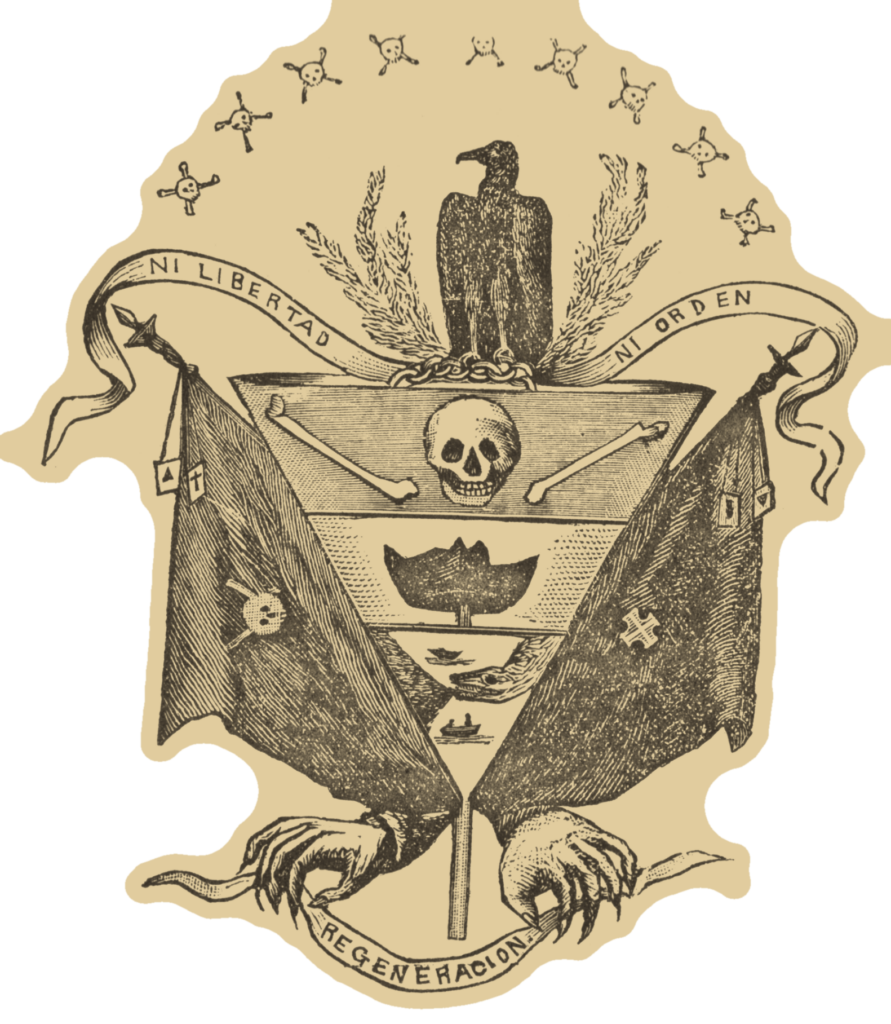
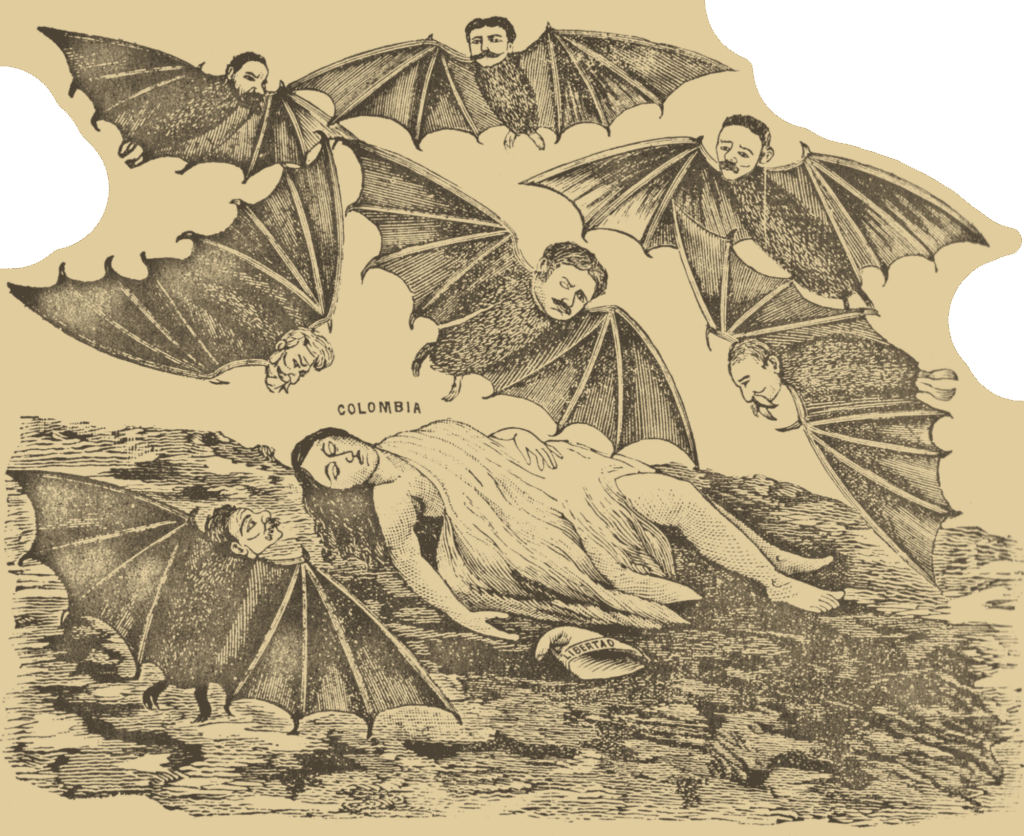
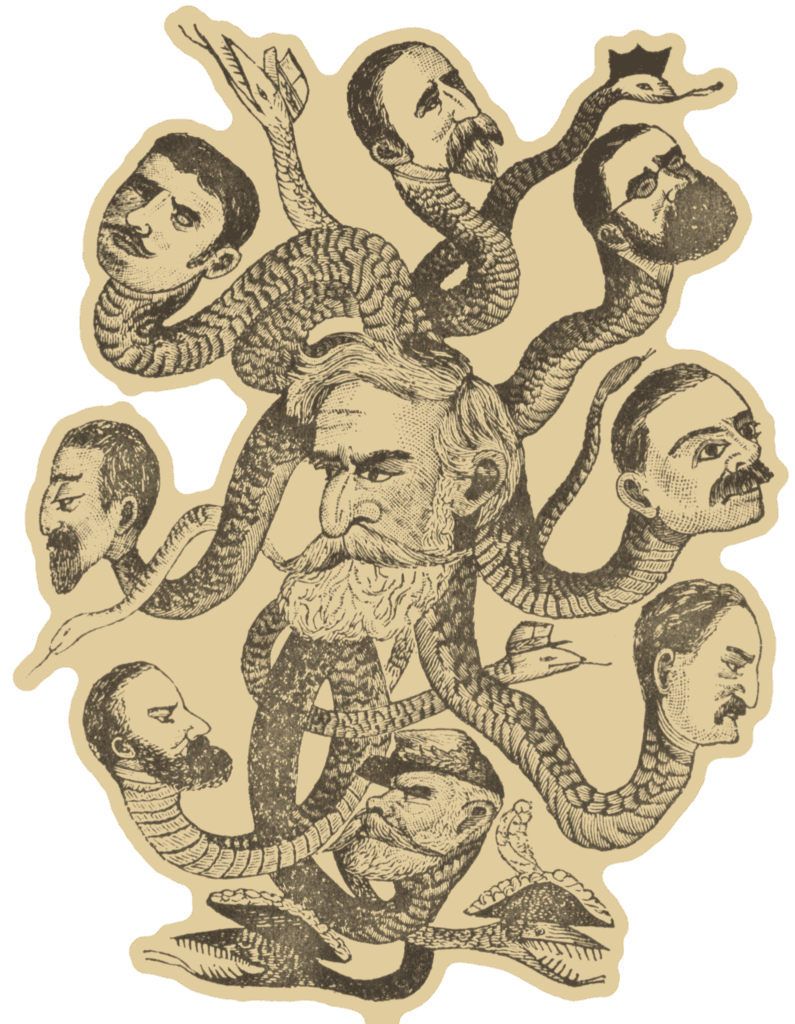
By the early 1890s, he had become one of the most persistent satirical voices against the Regeneration governments of Rafael Núñez and Miguel Antonio Caro. El Zancudo became the best known, but it was part of a larger campaign against censorship, corruption, clerical power, and restrictions on the press. Greñas returned again and again to the same people and institutions, turning them into insects, animals, grotesques, skeletons, and visual jokes.
The government answered with closures, arrests, confiscated presses, and eventually exile. El Barbero, launched in 1892, became the last major newspaper of Greñas’s Colombian period. In 1893 he was arrested and sent to the prison at Cartagena, where he later wrote that he had been held for nearly two hundred hours without fresh air or daylight and that the authorities intended for him to contract the fever that killed so many prisoners there.
He survived, but was so ill while aboard a ship bound to the United States the captain feared he would die during the voyage and put him ashore at Puerto Limón, Costa Rica. Greñas recovered there and stayed for the rest of his life.
The Work
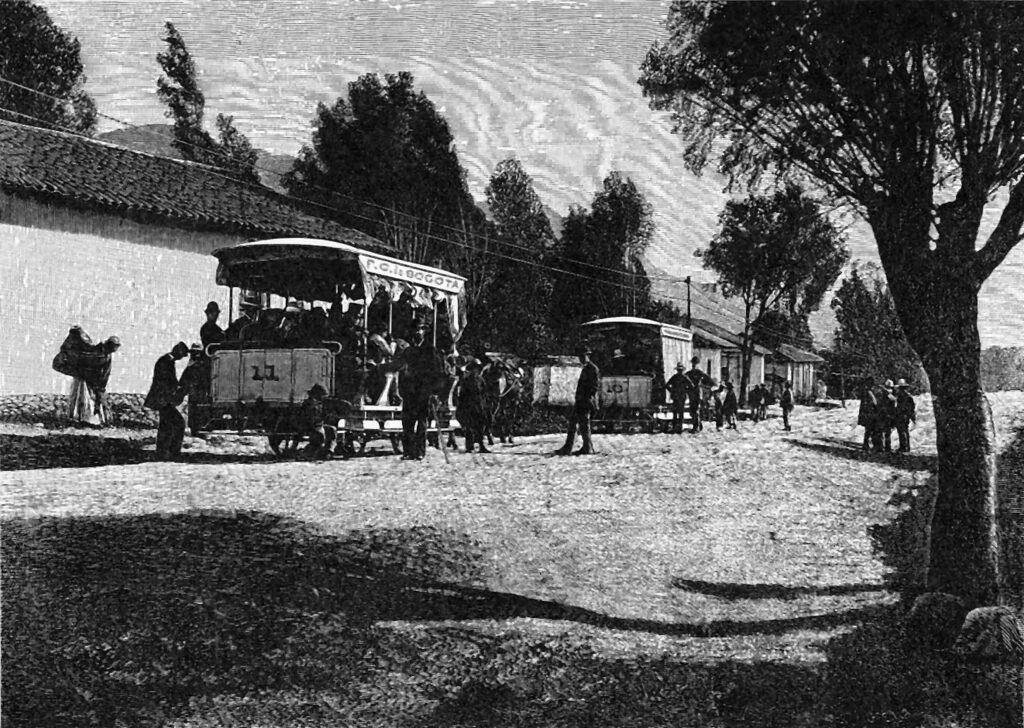
Greñas is remembered mostly for political caricature, but that was only one part of what he could do. His work for Papel Periódico Ilustrado included portraits, landscapes, city scenes, and images of Colombian life.
Greñas did not use engraving only as a weapon. He recorded the country around him, preserving people and places with a level of skill that continues to astound people to this day.
The Newspapers
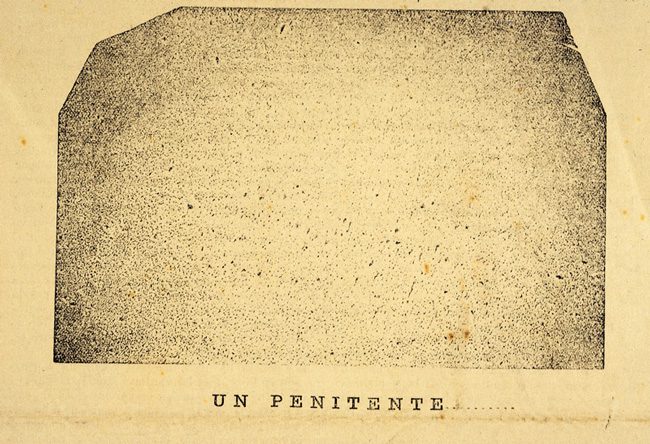
In 1892, censorship had become so aggressive that El Barbero answered by publishing the printing block itself with no image cut into it. Greñas titled it Un penitente. There was nothing left to show because the government had made showing it illegal.
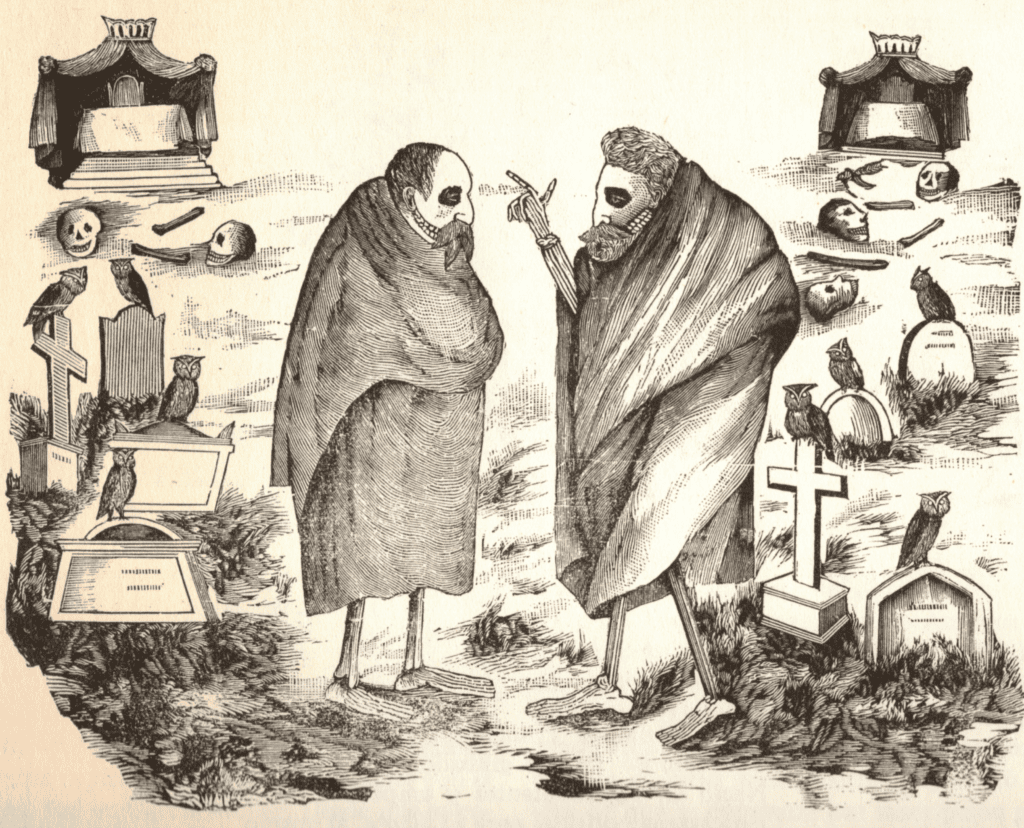
Published only weeks after the government closed El Zancudo, La venganza de los esqueletos shows Rafael Núñez and Carlos Holguín as skeletons conversing among the graves of Liberals killed at La Humareda during the civil war of 1885.
Bringing the Work Back
Greñas’s political work was attacked in his own time, but the larger erasure happened afterward. As the Regeneration consolidated its version of the country’s history, figures like Greñas were easier to leave at the margins, and exile helped push him further out of view. That public disappearance was mirrored inside his own family, where distance, migration, and broken connections meant that very little of his story survived into later generations.
What I found was an artist whose work still survived in newspapers, books, archives, and collections, even though he had largely disappeared from wider public memory. Since then, I have been trying to locate as much of that work as possible and understand the circumstances in which it was made.
That is the part Ink & Exile is continuing now. We are gathering the surviving work, improving access to it where we can, and rebuilding enough of the context around it that the images do not have to stand alone.
There are still gaps, and there always will be. That is part of what official erasure does. The work is still here, though, and over time we will make sure more of it can be seen again.
El Zancudo Collection
El Zancudo is the best known of Greñas’s newspapers and includes many of the images most closely associated with his political work. For Ink & Exile, the collection is not limited to reproducing those images exactly as they first appeared. Some pieces will remain close to the originals, while others may be remixed, reworked, or placed in new contexts by contemporary artists and designers. The point is to keep the work in circulation rather than freeze it as an artifact.